From Rough to Polished: The Diamond Manufacturing Process
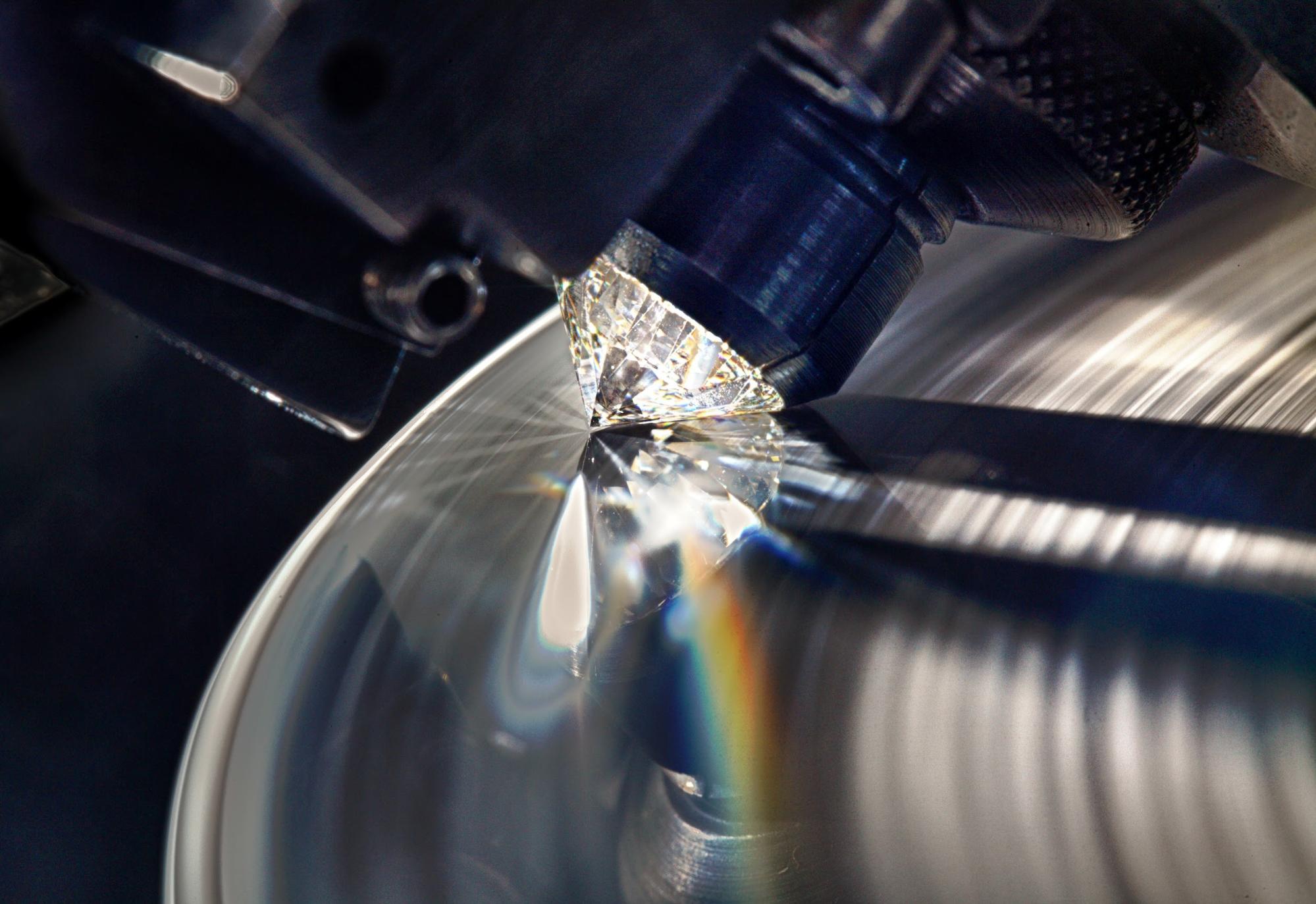
The beauty and allure of diamonds are undeniable, but this ever-popular gem’s journey from rough stone to jewelry store is backed by generations of craftsmanship and expertise. Join us as we take you through the entire diamond manufacturing process from start to finish.
Diamond Mining
Around half of all diamonds are mined in Africa, with the remainder being discovered in several other countries worldwide. There are a few ways to mine diamonds.
The first is alluvial mining, where diamonds are collected from closer to the surface. Alluvial mining usually occurs at riverbanks or on beaches and requires walls to be built and rivers to be diverted before digging down a minimum of 15 meters.
Diamond pipe or open ground mining involves locating the primary source of diamond deposits and inserting shanks into the ground. Immense volumes of soil are extracted and then transported to a plant for processing, screening, and extraction of rough diamonds.
Offshore mining locates diamond deposits in marine settings. Deep-sea and shallow-water mining are two of the methods used to extract materials, which are then processed off-site at large plants.
Lab-Grown Diamonds
An alternative to mining diamonds is to create them in a lab. There are two methods used to grow synthetic diamonds.
High-pressure, high-temperature (HPHT) is the traditional method of growing diamonds. HPHT mimics the forming of natural diamonds using carbon material and similar pressures and temperatures to those found deep within the earth.
Diamond seed is placed into a press where it’s heated. When molten metal dissolves the carbon source, carbon atoms settle on the diamond seed and growth of the HPHT diamond begins.
Chemical vapor deposition (CVD), the more modern way to grow diamonds, uses gas that contains carbon. A vacuum chamber is filled with this carbon gas and heated. A microwave beam causes carbon atoms to deposit onto a small diamond seed, where it begins to grow.
Sorting and Grading
Diamonds are sorted via machines and human examination according to their size and quality. After sorting, stones are graded according to the 4 C’s: clarity, color, cut, and carat weight.
Clarity refers to the stone’s internal flaws. Over 200 shades between colorless and black are used to determine color. The cut refers to the original shape of rough stones, which are typically sorted as sawable or makeable.
Sawable stones are able to be separated into two or more smaller diamonds. Makeable stones are able to be turned into a diamond without separation. Carat weight measures the stone’s actual weight, with one carat being equal to 0.2 grams.
Planning and Sawing
Before any rough stone can be cut, it must go through the planning process, in which the stone is analyzed by the cutter using their own knowledge and CAD software (computer-assisted drawing). The goal of planning is to choose a cut that will use as much of the rough stone as possible, generate minimal waste, and create a popular and quick-selling shape.
Sawing or cutting a rough stone into a diamond is done by laser or diamond-edged saw. Also called cleaving, this process involves either separating sawable stones or giving a makeable stone what will ultimately be its final shape.
Shaping and Polishing
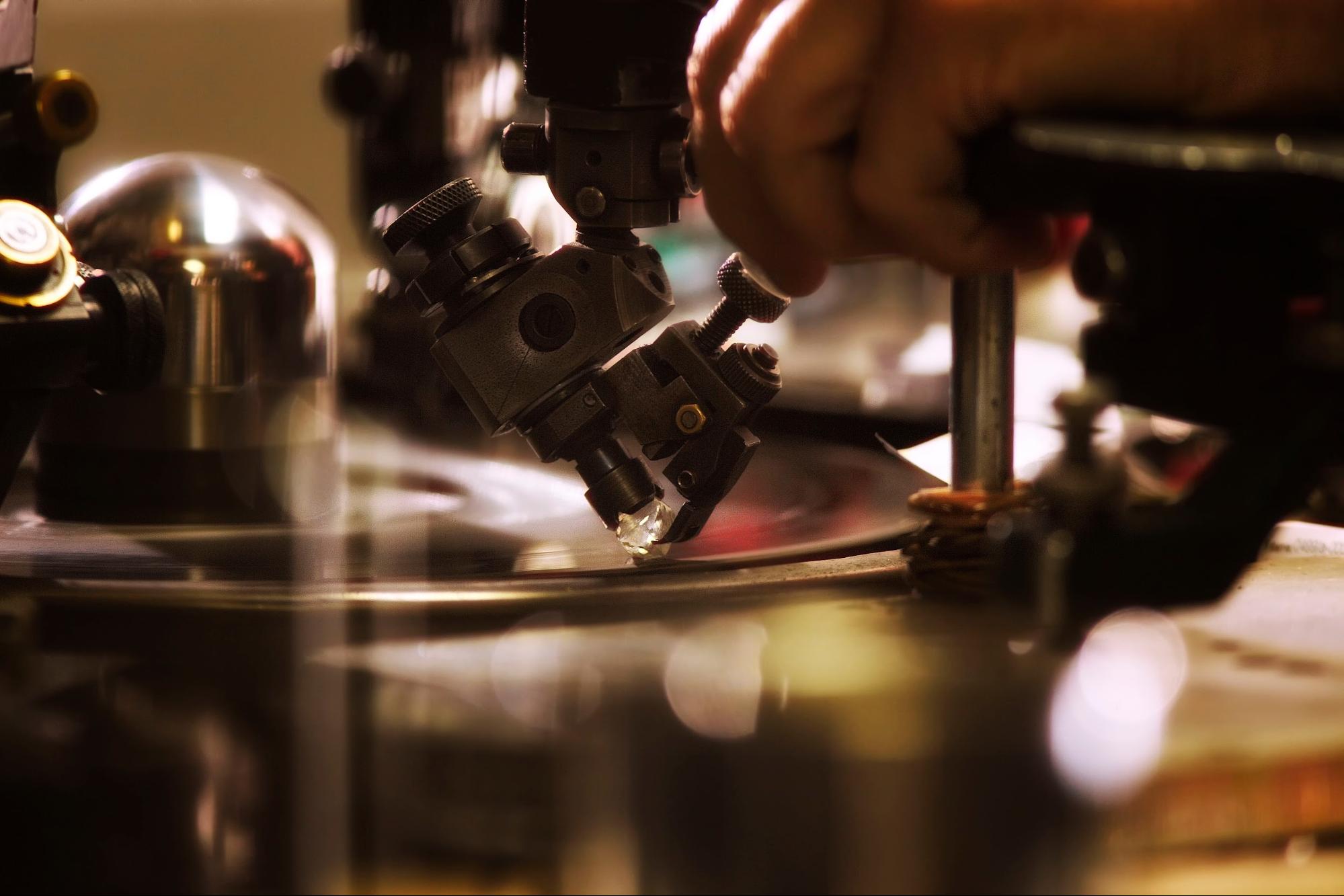
Once the rough stone has been shaped through the sawing process, its final shape is created. This is done using a cutting wheel covered with diamond crystals. The cutting wheel marks the stone’s initial facets, proportion, and outline. The next step is to cut the ancillary facets. Facet cutting today is done with lasers and computers, along with the cutter’s expertise.
Finally, each facet in the stone is polished to as perfect a finish as possible. This is determined by the stone itself, as some aspects, such as clarity, will be the deciding factor in the extent of polish that is ultimately available.
Setting and Mounting
After the stone has been cut and polished, it enters setting and mounting.
The setting can be thought of as the canvas for the main subject, which is the diamond. The white gold, silver, platinum, or other precious metals are chosen. The piece’s style is decided on and created using computer-aided design software and the 3D printing of what is called a wax tree.
The wax tree is a single model that contains several ring styles that will be cast in the same metal. The tree is used to create a plaster mold, which is baked to evaporate the wax. What’s left are several raw castings, into which molten metal will be poured.
The process is complete when the stone has been mounted into the ring. One common example is to push down on the prongs around a stone until it is secure.
After setting and mounting, the ring is polished. This is also when extras like rhodium plating are applied to protect the ring from scratching and preserve its color.
Quality Control and Certification
All diamonds and settings must undergo a thorough process of quality control, which includes examining the jewelry under magnification for gem quality, correct ring shaping, flaws, and imperfections.
Following completion of the examination, each stone and setting is given a grading report or certification. The certification is generated by experts at accredited institutions. The Gemological Institute of America, or GIA, is the most widely known and respected entity for the grading and certification of diamonds.
This certification includes detailed information, including grading according to the 4 C’s, the stone’s measurements, cutting style, polish grade, and many others. Because certification speaks to the quality and authenticity of a diamond, it will accompany the stone to its eventual place of sale, and then to its new owner.
Arizona’s Choice for High-Quality, Stunning Diamond Jewelry
You may wonder why it’s so important to understand the high-end diamond jewelry manufacturing process. The answer is simple: It’s important to know what you’re buying.
When you know where your diamond has come from, and understand everything that’s had to happen between mining or growing and what you see for sale, you can know that your hard-earned money has been spent wisely on a stone and setting that holds true and lasting value.
The Diamond Vault is where exceptional quality and excellent value meet. As a manufacturer and direct importer of certified diamonds, we are able to offer some of the most beautiful diamond jewelry at wholesale prices.
We’re also master jewelers; together, our brokers and cutters possess a combined 50 years of knowledge and experience of the production, purchase, and sale of fine jewelry.
Browse our vast collection of ring styles and diamond cuts or call 480-948-8444 today.